Not Just a Bad Back: The Inflammatory Back Pain That Takes Years to Name
Most back pain is mechanical. You strain something, it hurts more when you move, it settles when you rest, and within a few weeks it fades. That story is so common that when a different kind of back pain shows up, everyone reaches for the same explanation. A young adult with a stiff, aching lower back gets told it is a muscle strain, bad posture, or a gym injury, and the search stops there. But one form of back pain runs the opposite way. It is worse at rest, it wakes you in the second half of the night, and it eases when you get up and move. It carries a name that can take years to reach: axial spondyloarthritis. Healz is equipped with root-cause technology that weighs the whole pattern of a symptom instead of its loudest complaint, so back pain that behaves like inflammation does not get quietly filed under strain.
The back pain that behaves backwards
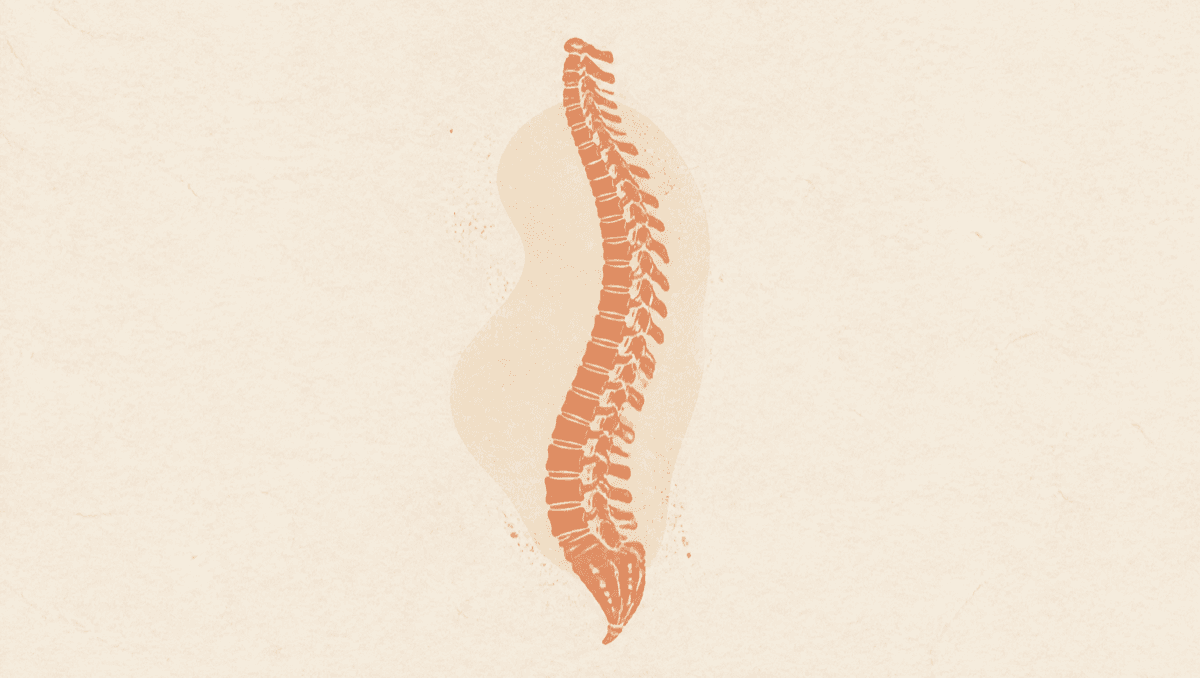
Mechanical back pain and inflammatory back pain point in opposite directions, and that is the single most useful thing to know. Mechanical pain gets worse with activity and better with rest. Inflammatory pain does the reverse.
The Assessment of SpondyloArthritis international Society (ASAS) defines inflammatory back pain by five features: onset before age 40, gradual (insidious) onset, improvement with exercise, no improvement with rest, and pain at night that eases once you are up and moving. When four of the five are present, the pattern points to inflammation with a specificity above 90 percent (ASAS). Morning stiffness that lasts more than 30 minutes and a strong response to anti-inflammatory medication are further hallmarks (Mayo Clinic Proceedings), and many people also describe pain that alternates from one buttock to the other.
Ask Healz.
One chat instead of ten apps. 1M+ rare cases checked. The root cause, not the label. Private.
Read that list against the usual advice for a sore back and the mismatch is obvious. Rest and time are exactly what does not help here. Someone who feels stiffest after a night's sleep and loosest after a walk is describing the opposite of a strained muscle, and that reversal is the clue that gets missed.
Why it hides for years
Back pain is one of the most common complaints in medicine, so a young person with an aching back rarely triggers alarm. Early on, standard x-rays of the spine and pelvis often look normal because the structural changes that show up on film can take years to develop. The pain waxes and wanes, gets blamed on sport, posture, or a mattress, and each flare is treated as a fresh mechanical episode rather than one chapter of a single story.
The result is a long lag. Diagnostic delay in axial spondyloarthritis is commonly reported at more than seven years, and a UK review found a mean of about 8.7 years between the first symptoms and the diagnosis. Delay tends to run longer in women and in people who are HLA-B27 negative, partly because the classic picture is still imagined as a young man with a positive gene. That mental template quietly filters out everyone who does not fit it.
There is a second reason the label arrives late. A negative antibody or a normal scan gets read as reassurance, when it is often just an incomplete look. The same trap shows up across rheumatology, where negative tests get mistaken for the absence of disease. In axial spondyloarthritis, absence of proof is not proof of absence.
What actually confirms it
Diagnosis leans on a combination, not a single test. HLA-B27 is a genetic marker carried by about 6 to 8 percent of the general population but present in roughly 83 percent of people with axial SpA (NIH), which makes it a strong clue rather than a verdict. Inflammatory markers in the blood, such as CRP and ESR, may be raised but are frequently normal, so a clean blood panel does not close the question.
Imaging is where the modern picture changed. The older definition of ankylosing spondylitis required visible damage to the sacroiliac joints on x-ray. MRI can detect active inflammation in those joints years before any structural change appears on film. That gap gave the disease a fuller name: axial spondyloarthritis, which includes non-radiographic axSpA, where the x-ray is normal but MRI shows active sacroiliitis. A person can have real, treatable inflammatory disease with a perfectly clean x-ray.
The ASAS classification criteria reflect this. In someone with back pain lasting three months or more that began before age 45, the disease can be classified through an imaging arm (sacroiliitis on MRI or x-ray plus one spondyloarthritis feature) or a clinical arm (a positive HLA-B27 plus two features). The point is that no one finding stands alone. The diagnosis is assembled from the symptom pattern, the gene, the blood markers, and the MRI together.
No single specialist owns the whole picture
Axial spondyloarthritis is rarely confined to the back. It travels with a cluster of associated conditions: uveitis (a painful red eye), psoriasis, inflammatory bowel disease, and enthesitis or dactylitis in the tendons and joints. Each of those can send a person to a different clinic, and none of those clinicians is looking at the spine.
So the eye inflammation goes to ophthalmology, the gut symptoms go to gastroenterology, the sore heel goes to podiatry, and the back goes to physiotherapy, and the thread that connects them is never pulled. This is the classic failure mode when multi-system symptoms fall through the gaps between specialists. The pattern only becomes a diagnosis when someone reads all of it as one case.
How Healz works your case
The advantage of Healz is that everything sits in one place: one chat, not ten apps. Frontier AI works your case, and it is equipped with root-cause technology, which is why it treats a back pain as a pattern to explain rather than a strain to assume. It cross-checks the full picture, the timing of the stiffness, the night pain, the eye or gut history, the HLA-B27 result, against 1M+ rare cases and drills toward the inflammatory cause that separate visits keep missing.
Its memory holds every result you upload and connects the dots across years of flares, so a pattern that looked like unrelated episodes becomes one timeline. You can drop in an MRI report of the sacroiliac joints for online MRI report analysis and it reads the findings in full context, and it works as a blood test AI analyzer and lab report reader for HLA-B27, CRP, and ESR so a normal number is not mistaken for a clean bill. When you want human confirmation or a second opinion, you can bring a board-certified doctor into the same chat.
Frequently asked questions
- What is the difference between inflammatory and mechanical back pain?
Mechanical back pain worsens with activity and eases with rest, while inflammatory back pain does the opposite: it is worse at rest, wakes you at night, and improves once you get up and move. Inflammatory back pain also tends to start before age 40, come on gradually, and come with morning stiffness lasting more than 30 minutes (ASAS, Mayo Clinic Proceedings). That reversal is the strongest early clue toward axial spondyloarthritis.
- Can you have axial spondyloarthritis with a normal x-ray?
Yes. Structural damage to the sacroiliac joints can take years to appear on x-ray, but MRI can show active inflammation much earlier. When the x-ray is normal but MRI reveals active sacroiliitis, the condition is called non-radiographic axial spondyloarthritis, and it is a real, treatable form of the disease. A normal x-ray alone does not rule it out.
- Does a negative HLA-B27 rule out ankylosing spondylitis?
No. HLA-B27 is positive in about 83 percent of people with axial SpA, which means a meaningful minority are negative and still have the disease (NIH). It is also carried by 6 to 8 percent of the general population, and most carriers never develop spondyloarthritis, so the gene is a clue rather than a yes-or-no answer. Diagnosis rests on the symptom pattern, imaging, and blood markers together, not on one gene.
- How long does axial spondyloarthritis take to diagnose?
Too long. Diagnostic delay is commonly reported at more than seven years from first symptoms, and one UK review found a mean of about 8.7 years. Delay tends to be longer in women and in people who are HLA-B27 negative. Recognizing the inflammatory pattern early is what shortens that gap.
The bottom line is simple. A back that is stiffest at rest, worst at night, and better on the move is not telling a mechanical story, and the years lost to axial spondyloarthritis are years spent treating the wrong one. Nothing rare is required to close that gap. What it takes is reading the pattern for what it is the first time, and refusing to let a normal x-ray or a common complaint end the search.
Written by Healz Team · Filed under Health Insights