Not Every Hot Swollen Joint Is Gout: How Crystal Arthritis Is Told Apart
A joint flares overnight. Red, hot, swollen, too tender for a bedsheet. The first word out of most mouths is gout, and a uric acid test seems to close the case. But a second crystal disease mimics gout almost perfectly, and uric acid can read normal in the middle of a genuine gout attack. The answer is not the reflex blood draw. It is identifying the actual crystal, and refusing to let the first label end the search, which is exactly how Healz reads a case.
The distinction is not academic. Gout and pseudogout share the same furious joint but come from two different crystals, follow two different long-term plans, and get separated by one definitive step. Here is how crystal arthritis is actually read.
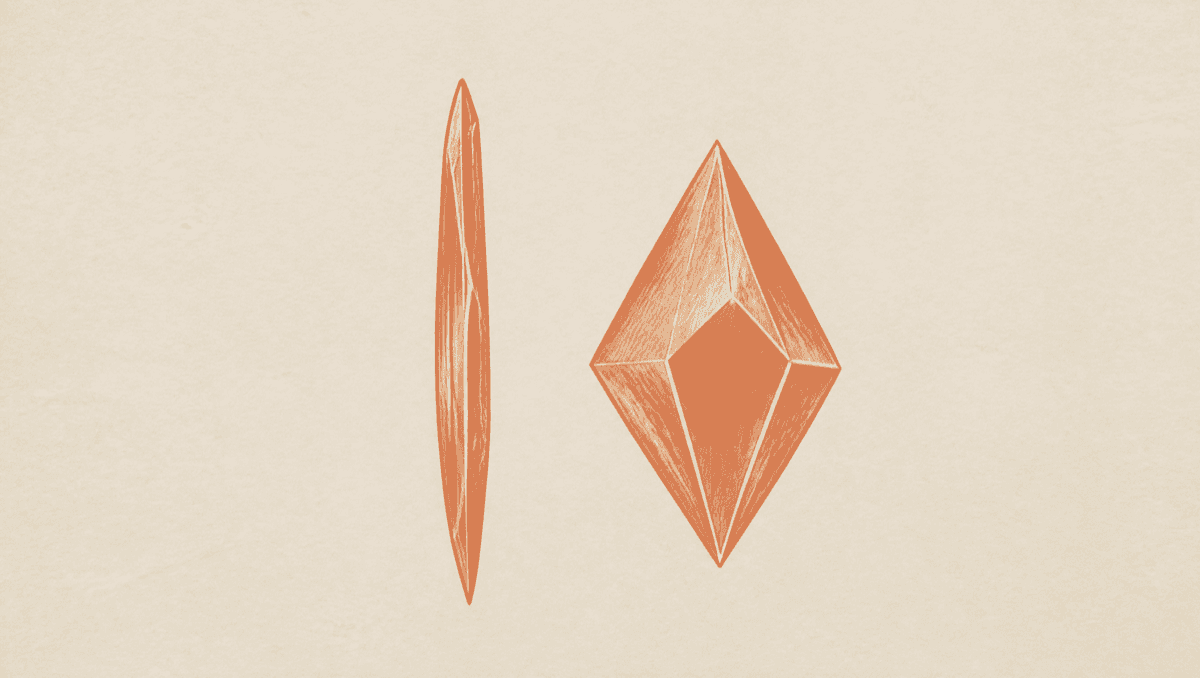
Two crystals, one furious joint
Gout and pseudogout are both crystal arthritis, and to the naked eye they can be indistinguishable. Both produce the abrupt onset of a red, hot, swollen, painful joint, usually flaring over hours.
The difference is the crystal doing the damage. Gout happens when uric acid builds up in the blood (hyperuricemia) and sharp monosodium urate crystals clump inside a joint, per the Cleveland Clinic. Pseudogout, formally calcium pyrophosphate deposition disease (CPPD), comes from a completely different crystal: calcium pyrophosphate. It has nothing to do with uric acid metabolism. Same symptom, different chemistry, and that is the whole reason the two get confused and the whole reason the confusion matters.
Ask Healz.
One chat instead of ten apps. 1M+ rare cases checked. The root cause, not the label. Private.
Where each one strikes, and who
The joint that flares is a strong hint, though never proof on its own.
Gout most often hits the joint where the big toe meets the foot, the first metatarsophalangeal joint, an attack classic enough to have its own name, podagra. It also shows up in the midfoot, ankle, knee, wrist, elbow, and fingers, and early on usually stays in a single joint, per the Arthritis Foundation. Gout skews more common in men.
Pseudogout prefers larger joints. The knee is the most commonly involved, followed by the wrist, while a podagra-style big-toe attack is rare in CPPD, per Medscape. It is largely a disease of age: roughly 3 percent of people in their 60s and as many as half of people in their 90s have the calcium deposits, and unlike gout it affects men and women about equally, per Harvard Health. So a hot knee in an 80-year-old woman is a very different starting probability than a hot big toe in a 50-year-old man, but neither pattern is diagnostic by itself.
Why the blood test can lie
The reflex move is to order a uric acid level and treat the number as the verdict. It is not.
Serum uric acid can sit in the normal range during an acute gout flare, so a normal result does not exclude gout, a point reflected in the 2020 American College of Rheumatology gout guideline and a recognized clinical trap. Some people have normal-uric-acid gout that flares with a normal level and even more intense inflammation. The reverse is also true: plenty of people carry high uric acid for years and never develop gout, so an elevated level alone does not confirm it either. Just as a negative antibody panel does not mean no autoimmune disease (see the seronegative trap in autoimmune diagnosis), a normal uric acid does not mean no gout.
Inflammatory markers add to the confusion. CRP and ESR climb during any crystal flare but cannot name which crystal caused it (see how to read inflammatory markers). They confirm inflammation, not gout, and not pseudogout.
The test that actually settles it
The one step that separates the two is joint aspiration: drawing fluid from the inflamed joint and examining it under compensated polarized light microscopy, the gold standard for both diagnoses, per Medscape.
Under that microscope the crystals declare themselves. Monosodium urate (gout) crystals are needle-shaped and negatively birefringent, appearing yellow when aligned parallel to the compensator's slow axis and blue when perpendicular. Calcium pyrophosphate (pseudogout) crystals are rhomboid or rod-shaped and positively birefringent, showing the opposite colors: blue when parallel, yellow when perpendicular. Shape, color, and the direction of birefringence together tell urate from calcium pyrophosphate with confidence a blood test cannot match.
Imaging offers a supporting clue for pseudogout. X-rays that show linear or stippled calcium deposits in cartilage or the knee menisci, called chondrocalcinosis, point toward CPPD, per the Cleveland Clinic. Ultrasound and dual-energy CT can help visualize urate deposits in gout. But the fluid under polarized light remains the definitive answer.
Why getting it right changes the treatment
For the acute attack, the two are managed similarly: NSAIDs, colchicine, or corticosteroids calm the inflamed joint, per Medscape. If the story stopped at the flare, the distinction would matter less.
It does not stop there. Gout is driven by uric acid, so its long-term plan is urate-lowering therapy, usually allopurinol or febuxostat, sometimes probenecid, to shrink the body's uric acid stores and prevent future attacks, with low-dose colchicine often used as prophylaxis when that therapy starts. Pseudogout has no equivalent. No drug dissolves calcium pyrophosphate crystals or stops new ones from forming, and urate-lowering therapy does nothing for it because CPPD has nothing to do with uric acid. Call pseudogout "gout," and the patient can be committed to a lifelong medication that cannot touch their actual disease. That is why identifying the crystal is not a formality. It decides years of treatment.
How Healz reads a crystal arthritis case
Healz is equipped with root-cause technology, so it does not accept "gout" as the answer just because a joint is hot and a uric acid level came back high. It cross-references your crystal analysis, uric acid trend, inflammatory markers, and imaging against 1M+ cases, drills past the reflex label, and flags the pattern that separates urate from calcium pyrophosphate, the difference that changes the treatment.
Everything sits in one place, one chat, not ten apps. Healz has memory that holds every result you upload, your aspiration report, your CRP and ESR over time, your X-rays and past flares, and connects them so a hot joint is read against your whole history, not as an isolated event. Frontier AI works the case, so when a normal uric acid would have closed the file, the investigation keeps going. Paste a joint fluid report or a lab panel and the blood test AI analyzer reads it in full context, not one number at a time, which is why an AI second opinion catches the mislabeled flare that a single reflex test misses.
When you want a human in the loop, you can bring a board-certified doctor into the same chat for a second opinion.
Frequently asked questions
- Can you have gout with normal uric acid levels?
Yes. Serum uric acid can fall within the normal range during an acute gout flare, so a normal result does not rule gout out. Some people even have normal-uric-acid gout with more intense inflammation. The reliable way to confirm gout during an attack is to examine joint fluid under polarized light, not to rely on the blood level alone.
- What is the difference between gout and pseudogout?
Both are crystal arthritis with the same red, hot, swollen joint, but the crystal differs. Gout is caused by needle-shaped monosodium urate crystals linked to high uric acid. Pseudogout is caused by rhomboid calcium pyrophosphate crystals and has nothing to do with uric acid. The crystals look different under polarized microscopy, and the long-term treatments are not the same.
- How do doctors tell gout and pseudogout apart?
The gold standard is aspirating fluid from the inflamed joint and viewing it under compensated polarized light microscopy. Monosodium urate crystals are needle-shaped and negatively birefringent; calcium pyrophosphate crystals are rhomboid and positively birefringent. X-rays showing chondrocalcinosis (calcium in the cartilage) support pseudogout. Uric acid blood levels alone cannot make the distinction.
- Is pseudogout treated the same as gout?
The acute flare is treated similarly, with NSAIDs, colchicine, or corticosteroids. The long-term plans diverge. Gout is managed with urate-lowering therapy such as allopurinol to reduce uric acid stores. Pseudogout has no drug that dissolves or prevents its crystals, and urate-lowering therapy does not help it, which is why an accurate diagnosis changes years of care.
A hot, swollen joint is not a diagnosis. It is a starting point with two very different chemistries behind it, and the reflex uric acid test can point the wrong way in both directions. The crystal under the microscope is what decides the name, and the name is what decides the treatment. Healz was built to keep asking that question until the real cause is on the table, not the first label that fit.
Written by Healz Team · Filed under Health Insights