The Answer Is Not the Impression Line: How to Read an MRI Report and Catch What It Downplays
You get the MRI report before you get the answer. You read to the bottom, to the line called the impression, and it says something like "nonspecific," or "clinically correlate," or "cannot be excluded." It feels like a verdict. It is not. A radiology report is written to hedge, on purpose, because the radiologist read your images and not you. The way to use it is not to trust the impression line. It is to ask the follow-up questions that surface what the report soft-pedals, the root-cause discipline Healz was built on.
This is not bad medicine. Hedging is how radiologists honestly signal uncertainty across a report they wrote without ever meeting you. The mistake is on the reading side, when a vague impression gets treated as a closed case.
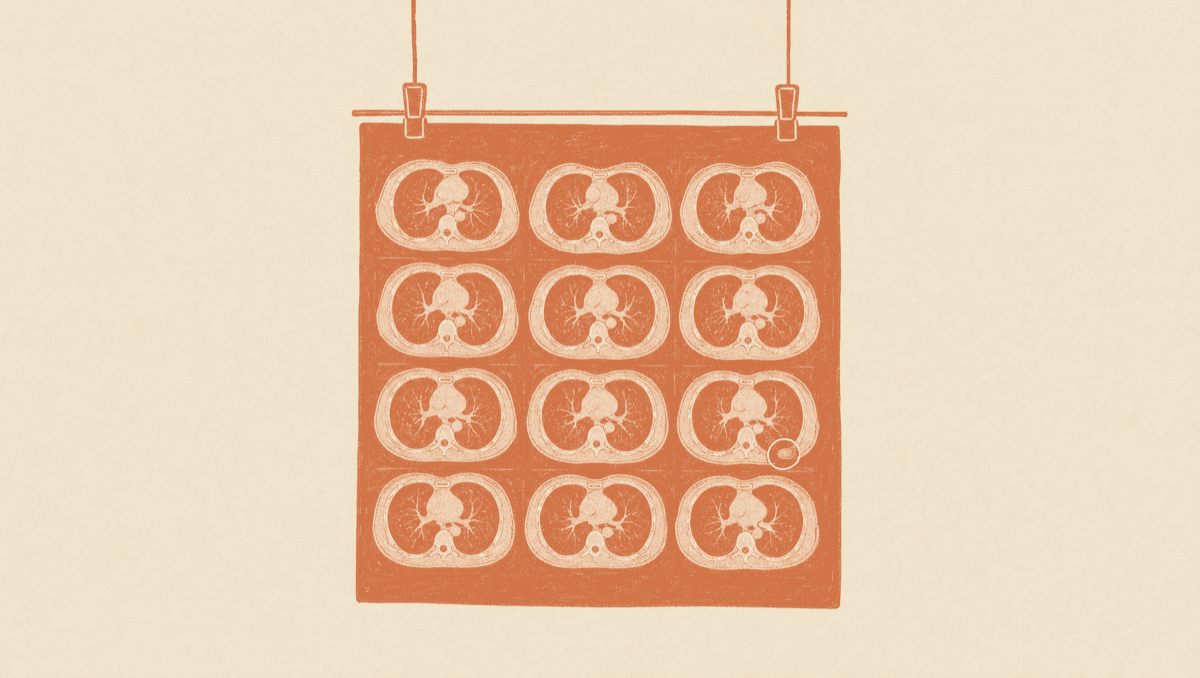
The radiologist read your pictures, not you
Start with what a radiologist actually does. They interpret an image. They usually do not have your full history, your exam, your bloods, or the story of how the symptom started. So when a report says "clinically correlate," it is not filler. It is the radiologist handing the picture to whoever knows you best and saying: line this up against the patient in front of you. It is a request for context the scan alone cannot provide.
The trap is what happens next. That request often goes unanswered. The report gets skimmed, the impression line gets read as the conclusion, and the "correlate" step, the whole point, quietly never happens. The image floats free of the person.
Ask Healz.
One chat instead of ten apps. 1M+ rare cases checked. The root cause, not the label. Private.
The words are vaguer than they sound
Radiology has a vocabulary of uncertainty, and the words carry less than they seem to. Even radiologists do not agree on what several of them mean.
- "Nonspecific." This does not mean normal. It means the finding is real but could fit several explanations. Studies show radiologists themselves read the same "nonspecific" phrasing as normal, equivocal, or clearly abnormal. It is a shrug, not an all-clear.
- "Cannot be excluded." A double negative that often exists to make sure a less likely possibility got a mention. It ranges from a genuine concern to defensive wording. On its own it tells you almost nothing about how likely the thing actually is.
- "Clinically correlate." Not a finding at all. A handoff. It means the answer depends on information the scan does not hold.
- "Further evaluation recommended." The one hedge you should never ignore. It names a specific next step. Skipping it is how findings get lost.
None of these should close a case. Every one of them is an invitation to ask a sharper question.
The "incidental finding" is not automatically nothing
The phrase that lulls people most is "incidental finding," something the scan picked up that has nothing to do with why you went in. Most of the time it is harmless. But "incidental" describes how it was found, not whether it matters.
Incidental findings are common, and most are benign. A 2018 systematic review and meta-analysis found potentially serious incidental findings on brain MRI in about 1 to 2 percent of asymptomatic adults, and of those, only about a fifth turned out to have a serious final diagnosis. Some are not benign, though, and the odds swing hard depending on where the finding sits and what it looks like. An incidental spot in one location is a footnote; the same word attached to another is the whole story. "Incidental" is a starting flag, not a verdict. The right response is a specific question about that specific finding, not relief because the word sounded casual.
How to actually read the report
The structure of a radiology report tells you where to look. Most reports run in the same order: the indication (why the scan was done), the technique (how), the comparison (against prior imaging), the findings (everything the radiologist saw), and the impression (the short summary at the end). This is the standard structure described by RadiologyInfo.org, an RSNA and ACR patient resource, which notes the impression is the summary clinicians act on and the findings section is where the detail lives. People read the impression and stop. That is backwards. The impression is a distillation, and distilling means leaving things out. The findings section is where the detail lives, including things the impression compressed into a single hedge.
So read the findings, not just the impression. When the impression says "nonspecific," go up and see what was actually described. When it says "correlate," ask: correlate with what, and did anyone do it. When it names a finding, ask what would confirm it and what would rule it out.
How Healz reads an MRI report
This is where the technology does the work. Healz keeps your whole case in one place, one chat, not ten apps. The strongest AI runs on it, reading the report as a whole, findings and impression together.
Its root-cause technology reads the whole report, not just the impression line. It flags where the wording is doing more hiding than telling, and turns each hedge into the specific next question. "Clinically correlate" becomes: correlate with which symptom, and did anyone do it. "Cannot be excluded" becomes: excluded by what test. An incidental finding gets put in context instead of being left to read as alarm.
Memory does the thing a single report cannot. It holds your prior imaging and history in the same chat and connects today's report to them, so a spot called "stable" is actually checked against last year, and a "nonspecific" line is weighed against the symptom that sent you in. Root-cause and memory work together.
When you want expert eyes on it, you can bring a board-certified doctor into the same chat for a second opinion.
Five ways to keep your own report honest
- Read the findings, not just the impression. The impression is a summary. The detail, and the thing that got softened, lives above it.
- Turn every hedge into a question. "Nonspecific" means ask what else it could be. "Correlate" means ask what it should be lined up against.
- Never skip "further evaluation recommended." It is the one line that names a next step. Track it until it is done.
- Treat "incidental" as a flag, not an all-clear. Ask what the specific finding is, where it sits, and what confirms or clears it.
- Get a second read when the finding is serious or the wording is murky. A fresh set of eyes on the same images changes the answer often enough to matter. When the report is doing more hedging than telling, that is the moment to ask again.
A radiology report hedges by design, and that design is honest. The failure is letting the hedge close the case. The answer to what a scan means was never sitting in the impression line. It lives in the questions you ask after it.
Healz was built to ask them. The wise run Healz.
Frequently asked questions
- What is the difference between the findings and impression on a radiology report?
The findings section is where the radiologist records everything they saw, area by area, noting what is normal, abnormal, or uncertain. The impression is the short summary at the end, the part most clinicians act on (RadiologyInfo.org, an RSNA and ACR resource). Because the impression compresses the findings, reading only the impression can miss detail that got softened into a single line.
- What does "clinically correlate" mean on an MRI report?
It means the radiologist wants the imaging finding lined up against the rest of your clinical picture: your history, physical exam, labs, and prior imaging, to judge what it actually means. The scan was read without the radiologist meeting you, so "clinically correlate" hands that step to whoever knows you. On its own the phrase is widely considered vague, so the useful response is to ask what specifically should be correlated, and whether anyone did it.
- Are incidental findings on an MRI something to worry about?
Usually not, but not never. An incidental finding is something a scan picks up unrelated to why it was ordered, and most are benign. A 2018 systematic review and meta-analysis found potentially serious incidental findings on brain MRI in about 1 to 2 percent of asymptomatic adults, and of those, only about a fifth had a serious final diagnosis. Whether one matters depends on the specific finding, its location, and its appearance, so the right move is a specific question about that specific finding, not blanket worry or blanket relief.
- Should I get a second opinion on my MRI or radiology report?
It can be worth it, especially when a finding is serious or the wording is murky. When outside imaging is reread by a subspecialist radiologist, studies report clinically significant discrepancies in a meaningful share of cases, often higher for complex scans, and these rereads can change management. A fresh read of the same images is one of the most direct ways to test whether a hedged report closed the case too early.
Written by Healz Team · Filed under Health Insights