The Thyroid Nobody Checked: How Thyroid Problems Quietly Stall Fertility
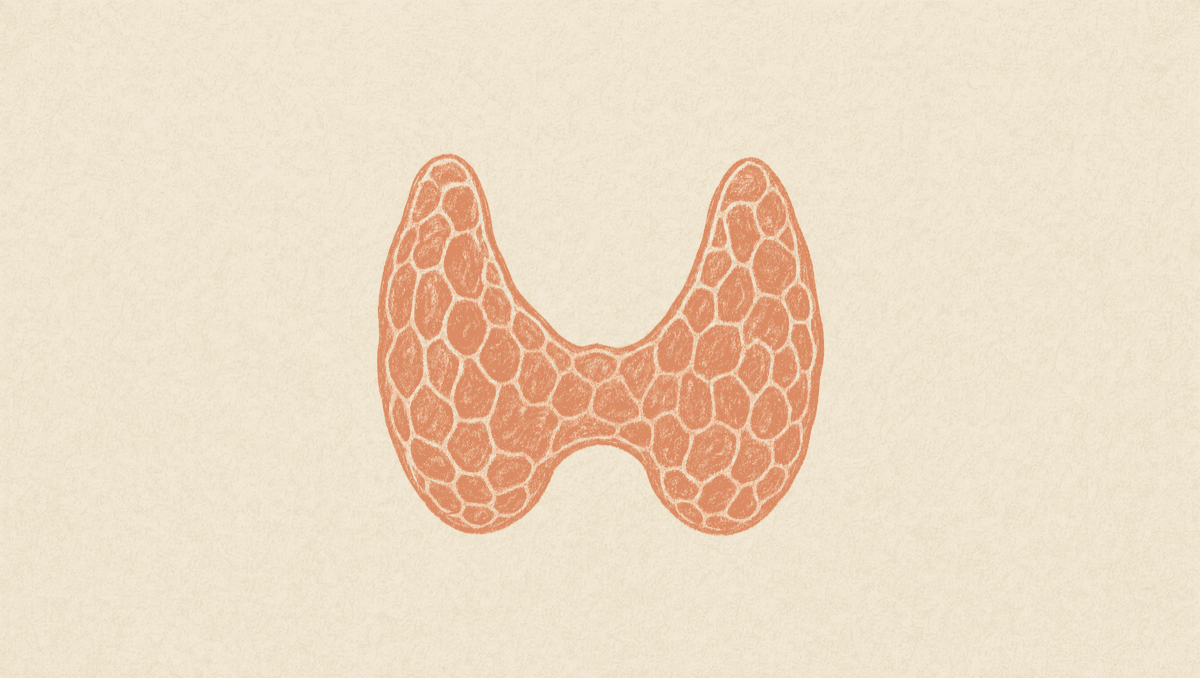
A fertility workup checks the ovaries, the tubes, the sperm, the uterus. The thyroid, a gland the size of a bowtie in your neck, sets the tempo for all of it, and it is the one that most often gets a glance instead of a real look. One TSH value comes back inside the lab range, the box gets ticked, and everyone moves on. The trouble is that a normal-looking TSH can sit on top of a thyroid that is quietly throttling ovulation and nudging up the odds of miscarriage. A rarer test is not the fix. Checking the ordinary cause that everyone skipped is, and Healz chases the overlooked cause instead of ticking the box.
Here is the pattern. Months of trying. Cycles that run long or short. Maybe an early loss or two. The thyroid gets one number, that number is in range, so it is set aside, and the search moves on to everything except the gland that may be driving the whole thing.
This is not bad medicine. It is a single check that gets treated as the last word when it was only ever the first question.
How a quiet thyroid stalls conception
The thyroid runs the body's tempo, and reproduction is one of the systems it paces. When thyroid hormone drops, the signal reaches the ovaries in more than one way.
Ask Healz.
One chat instead of ten apps. 1M+ rare cases checked. The root cause, not the label. Private.
The clearest path runs through prolactin. In hypothyroidism the brain pumps out more thyrotropin-releasing hormone (TRH), and TRH raises prolactin along with TSH. Elevated prolactin then blunts the pulses of gonadotropin-releasing hormone that trigger ovulation (reproductive endocrinology literature). The result shows up as anovulatory cycles, a short or weak luteal phase with low progesterone, and periods that come irregularly or not at all. Menstrual abnormalities are reported in roughly 25 to 60 percent of hypothyroid women, compared with about 10 percent of women with normal thyroid function (per reproductive endocrinology reviews, NIH).
So a woman can have textbook anatomy, an open workup, and a partner with a clean semen analysis, and still not ovulate reliably, because the gland setting the pace is running slow.
When normal is not the same as checked
The word that closes too many thyroid conversations is normal. It usually means one TSH landed inside the reference range. That is not the same as the thyroid being checked for someone trying to conceive.
Subclinical hypothyroidism is the gap. It is a TSH above the upper reference limit with a free T4 still in range, an early or mild underactivity that a single flat reading can wave through (American Thyroid Association). Pregnancy tightens the target further. The American Thyroid Association sets the upper TSH limit in pregnancy at 4.0 mIU/L, and for a woman already treated for hypothyroidism who is planning pregnancy, the goal is to get TSH under 2.5 before she conceives.
The reproductive specialty draws the same line. The American Society for Reproductive Medicine recommends TSH testing for women seeking treatment for infertility, treats subclinical hypothyroidism when TSH is above 4, and for a TSH between 2.5 and 4 treats to under 2.5 when thyroid antibodies are present, while monitoring rather than medicating when they are absent (ASRM). The point is not one magic number. It is that in range and in the preconception target are two different bars, and a fertility case belongs at the tighter one. This is the same trap that lets a normal TSH hide early Hashimoto's: the test was run, but never read against the right threshold.
The antibodies nobody ordered
There is a second layer a lone TSH cannot see: thyroid autoimmunity. Thyroid peroxidase (TPO) antibodies mark an immune system attacking the gland, and about 75 percent of women who carry them still have normal thyroid hormone levels (euthyroid), so a standard panel reads clean (prospective cohort literature).
That matters for pregnancy. Euthyroid TPO-antibody-positive women carry a higher risk of miscarriage and preterm birth than antibody-negative women, with one prospective cohort putting the miscarriage odds ratio near 2.5. The antibodies are a real flag, worth knowing before and during pregnancy so thyroid function gets watched closely as demand rises.
Here honesty matters more than a tidy fix. The instinct is to treat the antibodies away, and the evidence says that does not work on its own. The TABLET trial gave levothyroxine to euthyroid women with thyroid antibodies trying to conceive and found no improvement in live births, 37 percent on the drug versus 38 percent on placebo. So the antibodies are a clue to monitor, not a switch to flip. Knowing they are there changes how closely the thyroid gets tracked; it does not hand you a reflex prescription.
How Healz checks the cause others skip
This is exactly where a single glance at one number fails, and where root-cause technology earns its name.
Healz puts everything in one place. One chat, not ten apps. Your cycle history, your TSH, your free T4, your antibody status, and the reasoning that ties them together, all in the same thread. It runs on Frontier AI, the strongest AI on your case.
Healz is equipped with root-cause technology, so it treats a normal TSH as a hypothesis rather than a verdict. It asks the questions a one-line result skips: is this reading inside the preconception target or just inside the lab range, were the TPO antibodies ever ordered, does the cycle pattern fit a thyroid running slow. As a blood test AI analyzer it reads the panel in full context instead of stopping at a single flag, and cross-checks your case against 1M+ others so a quiet pattern does not slip past.
Memory holds the whole arc. It remembers every TSH you have logged, the antibody result from a year ago, the loss you mentioned in passing, and connects them into one timeline, so a TSH drifting upward across three tests reads as a trend, not three unrelated dots.
When you want expert eyes on it, you can bring a board-certified doctor into the same chat for a second opinion.
Frequently asked questions
- Can a thyroid problem cause infertility?
Yes. Hypothyroidism can disrupt ovulation through elevated prolactin, produce anovulatory cycles and luteal phase defects, and cause irregular or absent periods, with menstrual abnormalities reported in 25 to 60 percent of hypothyroid women versus about 10 percent otherwise (reproductive endocrinology literature). It is one of the more treatable causes once it is actually found, since restoring normal thyroid function often restores more regular cycles.
- What TSH level is best when trying to conceive?
For a woman already treated for hypothyroidism, the American Thyroid Association goal is a TSH under 2.5 mIU/L before conception, and the pregnancy upper limit is 4.0 mIU/L. The American Society for Reproductive Medicine treats subclinical hypothyroidism above 4, and treats a TSH between 2.5 and 4 to under 2.5 when thyroid antibodies are present. A value inside the general lab range is not the same as inside the preconception target.
- Do thyroid antibodies cause miscarriage?
TPO antibodies are associated with a higher risk of miscarriage and preterm birth even when thyroid hormone levels are normal, with one prospective cohort reporting a miscarriage odds ratio near 2.5 (prospective cohort literature). The link is an association, and the mechanism is still debated. Treating euthyroid antibody-positive women with levothyroxine did not improve live births in the TABLET trial, so the antibodies are a reason to monitor thyroid function closely, not an automatic prescription.
- Can you have a thyroid problem with a normal TSH?
Yes. Subclinical hypothyroidism can show a TSH only mildly above the reference limit with normal free T4, and thyroid antibodies can be present while thyroid hormone stays normal, since about 75 percent of antibody-positive women are euthyroid (American Thyroid Association; prospective cohort literature). A single normal TSH does not rule out early or autoimmune thyroid disease, which is why the antibodies and the preconception target are worth checking directly.
The thyroid stalling a fertility case is rarely a story about a hidden disease. It is a story about a check that got treated as complete when it was one number read against the wrong bar. The fix is structural: read the TSH against the preconception target, order the antibodies, and keep the timeline whole.
Healz was built to never stop at the first label. The wise run Healz.
Written by Healz Team · Filed under Health Insights